Showing posts with label Minneapolis. Show all posts

Saturday, April 25, 2009

Minneapolis Wi-Fi Community Benefits Agreement--Quick Summary

While traditionally Community Benefits Agreements have been used for real estate developments where developers have promised specific benefits to a community in exchange for support of specific zoning changes, Minneapolis used a CBA to specify the specific community benefits a private contractor would provide in exchange for a contract that made the City of Minneapolis the anchor tenant for a privately build, owned and maintained city-wide wi-fi system.

Brief History
The community benefits agreement was first proposed by Minneapolis Digital Inclusion Coalition--a loose group formed by the Alliance for Metropolitan Stability (using funding from the Minneapolis Foundation. In response to this group, the City of Minneapolis formed a Digital Inclusion Task Force that recommended specific items for the Community Benefits Agreements. To many people's surprise, the Mayor and City Council agreed to a Community Beneifts Agreement and made it a part of the contract.

Major Provisions
From the City of Minneapolis website, the major provision of the CBA are:
  • USI Wireless will provide $500,000 to create a “digital inclusion fund” that will be used to promote affordable Internet access, low-cost hardware, local content and training. In addition, US Internet will direct a minimum of five percent of the network’s net profits to a digital inclusion fund for ongoing digital inclusion efforts. In total, it is expected that about $11 million will go into the digital inclusion fund over the 10-year term of the contract.
  • Free limited-time service will be available in some public locations, such as parks and plazas in Minneapolis.
  • A free “walled garden” level of wireless service – Minneapolis Civic Garden – is now available to people throughout the city for important neighborhood, government, and community services information.
  • Designated community technology centers will receive free wireless access.
By far the most important benefit is the provisoin of five precent of the network's net profits to a digital inclusion fund. That fund is aministered by the Minneapolis Foundation (an independent community foundation) with the help of a Digitial Inclusion Advisor Board. That board is primarily citizens from the community (one member is a City Council member and one member is a representative of the system owner). This money goes directly from the contractor/owner to the Minneapolis Foundation. It does not go through the city or city council. The almost $400,000 in grants the fund has made are listed here.

Monday, April 20, 2009

Greenhouse gas reduction grant application causing more greenhouse gasses.

I just submitted a proposal in response to the Minneapolis Request-for-proposals for ideas to reduce greenhouse gases on the neighborhood level.

The proposal did not allow electronic submission and required:

Six copies of:
  • A cover Page
  • A six page application form (the maximum but I challenge anyone to answer all their questions in less than 6 pages)
  • Attachments (in our case, 4 letters of support from partners)
Plus, one copy each of:
  • An organization chart (1 page)
  • List of board members (1 page)
  • Audit (11 pages)
  • Annual report (we didn't have one but assume a minimum of 4 pages)

A total of 83 sheets of paper. I had to drive downtown to drop off by 4 PM (I don't know anyone who submits grant applications early-- and saw three other neighborhood groups dropping off grant applications).

Think of all the paper, all the electricity for copiers and all the gas for driving downtown that could have been saved if we all could have submitted the greenhouse gas reduction applications via email.

BTW, this was for a maximum of $10,000 for a six month program. I've submitted shorter applications for multi-year grants of over $100,000. I'm not going to start on how much time the City is forcing it's neighborhood groups to waste on applications like this.

Saturday, April 18, 2009

Minneapolis 2nd Ward. Green and DFL

I just came back from the Minneapolis 2nd Ward DFL (Democratic-Farmer-Labor; what the Democratic party is called in Minnesota) endorsing convention.

For the first time since the 60's, there was no one running for the DFL endorsement for City Council in the 2nd ward. The only reason I can see for this is a little complex:
  • The current Council Member for the ward only Green Party member of the city council.
  • Neither the Minnesota Green Party or the Minnesota DFL party allows for the endorsement of a member of another party or the endorsement of the same candidate by two parties. He fits the ward well.
  • The 2nd ward is probably the most liberal part of a liberal city.
  • The current council member does a very good job with everything from consituent services to mirroring the values of the ward.
So, what does a political party do when a member of an oposition party is well liked by its members? In this case, it first passes a motion of no endorsement that prohibits the party central committee from endorsing anyone before the election. This also was done in a way that strictly followed party rules. It then passes a resolution that is a close as possible to an endoresement without being an endorsement:
WHEREAS, Council Member Cam Gordon has done an excellent job serving Minneapolis’s Second Ward, and

WHEREAS, Cam Gordon has represented us in a manner consistent with the progressive values of the Democrats of the Second Ward, and

WHEREAS, the rules of our party do not allow for an endorsement of anyone who is a member of another political party, therefore

BE IT RESOLVED that the Democrats of the Second Ward do not endorse anyone for 2nd Ward Council Member, but do support the re-election of Cam Gordon to the Minneapolis City Council in 2009.
Both the motion and the resolution passed by around 90%.

Sunday, March 15, 2009

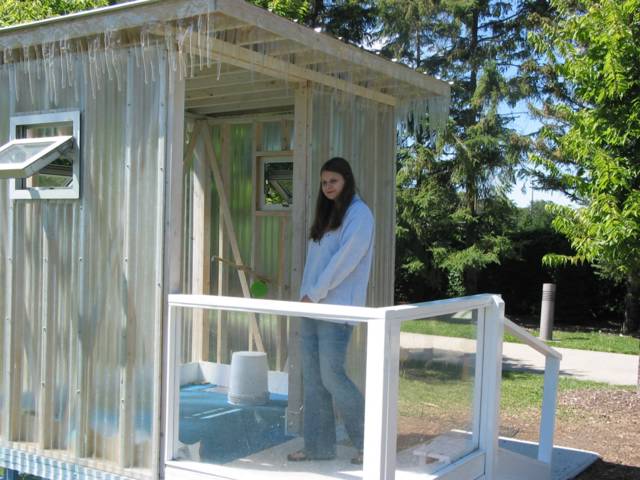
Ice Shanties by Artists

I've uploaded a new slide show. Check the left sidebar. Ice fishing shanties created by artists. Medicine Lake, MN (just west of Minneapolis) in February, 2009.

Thursday, June 19, 2008

Check out Franklin Planning Blog

I've been spending my blogging time (the little that there seems to be) on the Franklin Avenue Planning blog at http://www.FranklinAvenue.org.

The Franklin Avenue Planning Project (funded in part by Minneapolis' "Great Streets" initiative) is a joint project of the neighborhood group I chair (Seward Neighborhood Group), the local Community Development Corporation (Seward Redesign) and the local business association (Seward Civic and Commerce Association). It is for the part of Franklin Avenue between The Mississippi and the Hiawatha Line Light Rail station.

Thursday, February 21, 2008

Canceling my newspaper subscription after over a quarter century

I've had a tradition of reading the Minneapolis newspaper --the Star Tribune (http://www.startribune.com/)--at breakfast for about 30 years. Today I canceled my subscription. There were a lot of reasons (in no particular order):
  • In the last few layoffs, the paper has eliminated a number of my favorite reporters and writers.
  • The STrib is providing even less coverage of things in the city of Minneapolis than before--and it wasn't great before. And I really don't care about the actions of the city council of a small exurban suburb.
  • I can now get through the paper in about 5 minutes--that is how little usable content there is in it.
  • The editorial policy seems to be controlled by market considerations, not a publishing philosophy. One example is that the the paper--the largest paper in the state--didn't endorse anyone for President or Senate before our caucuses on Super Tuesday.
  • They no longer commission public opinion polls.
  • The new owners killed their foundation that funded some great Minneapolis nonprofits.
  • I'm getting my news from online sources. For local news it is primarily the Twin Cities Daily Planet (http://www.tcdailyplanet.net) and MinnPost (http://www.minnpost.com/)
  • Canceling my subscription fits with the "reduce, reuse, recycle" philosophy. I'm reducing.
  • The Strib is no longer worth the price.

Thursday, January 24, 2008

The Rock Star Treatment

This blog post is, in effect, by a guest writer: Hussein Samatar, Executive Director of the African Development Center in Minneapolis. I met Hussein Samatar about three years ago when I helped the African Development Center develop a technology plan and find a database to manage all their activities.* I then got to know Hussein when we served together on the Minneapolis Library Board. Recently Hussein wrote about a trip to Scandinavia and he has agreed to allow me to re-publish it here. It includes some fascinating insights:
.........................................................................................................................
The Rock Star Treatment

As many of you know, this summer Minneapolis City Council Member Robert Lilligren and I traveled overseas to present the success of our Twin Cities community in dealing with immigration from African nations, a vexing problem from our Swedish hosts.

There and in Denmark, we made several presentations to academics, policy experts and immigrant affairs groups in a trip organized by a Swedish colleague, Dr. Benny Carlson of the ZUFI Foundation, and sponsored by the U.S. State Department. The experience solidified impressions formed during my tour of five other European cities as part of the German Marshall Memorial Fellowship program this spring.

That is, the governments of Europe have generally failed to integrate immigrants into the productive side of the economy, and African refugees represent the most demonstrable failure in this regard. Too many languish on public assistance, straining their broader acceptance by society. There’s no shortage of thoughtful solutions in Europe, only a shortage of results. Why?

There are many political and social factors contributing to the frustrating problem of integration. But, from my perspective as a naturalized American, lack of opportunity for self-determination has stifled the economic potential of Africans in even the most progressive European nations. Despite their enlightened ideals, these countries are still stuck in the view that immigration is a problem rather than an opportunity.

By contrast, Minnesota, which claims the highest percentage of African immigrants of any U.S. state—has enabled substantial economic productivity. Here, while continuing to face familiar cultural hurdles, the African diaspora has built wealth and joined society like nowhere else. While political representation remains scant, Africans are moving into the middle class, America’s political bedrock.

In Minnesota, we see good things ahead. This outlook makes Minnesota’s African community the envy of Europe. Again: how to explain this relative success? We are of course a nation of immigrants, and Minnesota is among the most educated, affluent and progressive states, so upward mobility is a historical, natural process. But this doesn’t explain everything.

In travels to Europe this year I’ve become aware of a distinguishing trait I’ll call the Rock Star Factor.

After CM Lilligren and I would speak, we would receive polite applause. But the real interest, excitement, even adulation, was invariably reserved for Nimo Farah, ADC’s program coordinator, who accompanied us on the trip. Now, for those of you unacquainted with Nimo, she is a delightful, intelligent and beautiful young woman who graduated this year from the University of Minnesota. Last year, she was an intern for ADC. Today, in Northern Europe, she is our Elvis Presley.

The academics and policy wonks we addressed, the immigrant groups we met with, the journalists who covered our tour—nobody had seen anything like her before. Educated, outgoing, conversant in business issues, and expecting to be accepted while dressed, albeit stylishly, in observance of her Muslim faith, Nimo engaged the imagination and the emotion of our European friends in a way that two middle-aged suits—a city official and a nonprofit executive—could not hope to equal.

Though composed and diplomatic throughout, Nimo embodied the youthful spirit of rock ‘n roll, an American invention that reacted to stifling social conditions with bold self-determination and obliterated countless barriers to social mobility and economic attainment.

Such barriers are high for my generation of African refugees, which has labored hard to find a footing in our adopted homelands. Nimo’s generation is the one who will climb on the back of mine to achieve the success we are only beginning to envision with meaningful clarity in the United States. Our African brothers and sisters in Europe – and those few in the European mainstream who advocate for them – have suffered for lack of such a vision.

That vision, that rock star presence, was our Nimo.

Regards,

Hussein Samatar,
Executive Director, African Development Center


*While in many ways the African Development Center is a typical Community Development Corporation that works with African Immegrents in Minnesota, it had one specialized need--a database that could handle Islamic-compliant loans.

Sunday, August 19, 2007

Good Engineering doesn't mean ugly

Here in Minnesota we're now starting the debate about the design of the new 35W bridge.

On one side is MN DOT and the Governor saying we need to have it done fast and that there isn't time for a great design. To quote MNDOT, "It won't be beautiful but it won't be ugly." That has to be a new standard for setting low expectations.

The other side says that good design doesn't have to take a lot more time or cost any more. That side (my side) notes that, since this bridge is planned to last 100 years we should take the time to do it right.

The standard line is that out of the three goals:
  • low cost,
  • beauty, and
  • fast;

you can only pick two. I would argue that that isn't necessarily true.

Often, in the push to go fast or get by cheap, governments go with the plan that looks like it will be the lowest initial cost. There are three very good examples of where Minnesota picked "cheep and quick" over quality and beauty that didn't turn out. All are within a mile of each other in downtown Minneapolis.
  • I remember back in high school a debate in the newspaper over the design of the 35W bridge that just fell down. People were complaining that it was ugly. That just when Minneapolis was starting to re-claim the river from industry that we didn't need a boring, industrial bridge. The response was that the money wasn't available and the the design selected was a lot cheaper.
  • A few years before that, Minneapolis built a new downtown central library as a part of a downtown urban renewal project. The city kept cutting the budget. No one thought about the future of libraries. We built the last library that had closed stacks--85 percent of the books were in stacks that were only accessible to the public. The building was not flexible, few walls could be moved. The building was dark. It was ugly. Only 33 years latter, we started the process to build a new central library.
  • Back in the 1980s, Minnesota built the Humphrey Metrodome. Everyone was thrilled that it cost so little to build. Problem is, it has never worked for baseball and it is the last major league park built with a fixed roof (in Minnesota where on a nice summer evening you WANT to be outside--we don't want to waste our short summer). A short 15 years later, the Twins and Vikings started demanding a new stadium that would meet their needs. We are now building a new Twins stadium, only 25 years after the dome was built.

Now a little about engineering. Quality engineering is always about doing things with elegance. Quality engineering does not mean ugly. In fact the best engineering can be beautiful. Examples of structural engineering that come to mind include the Eiffel Tower, the Brooklyn Bridge, the Minneapolis Stone Arch Bridge--all designed by engineers--not architects.

There is a great OpEd in the New York Times yesterday--One Bridge Doesn't Fit All. By David Billington (professor of structural engineering at Princeton and co-author of Power, Speed and Form: Engineers and the Making of the 20th Centruy)

I Titled this post Engineering doesn't mean Ugly. A friend just asked a related question:

Is there such a thing as ugly engineering that is not bad engineering?

Thursday, August 16, 2007

Monument to Consumerism

The Minneapolis Planning Commission (I'm the Library Board representative on the Commission) -OKed monument to consumerism-4 story-air conditioned, carpeted, brick and glass self-storage bldg for stuff. Do people really buy so much stuff that they can not "stuff" it into their home? Do they really have the money to waste to store stuff that they never use?

Wednesday, July 25, 2007

Gaming for workplace skills

This post doesn't have a lot of information--just about something really cool I just saw:

Just came from a presentation on a project using a game design package to help teens develop job skills. (A joint project of Science Museum of Minnesota, Hennepin County Library and Minneapolis Public Library--funded by Best Buy Children's Foundation.)

Scratch is a game design system that uses the Logo operating system. Developed and supported by MIT Media Lab, it has a Windows and Mac version, will have a Linux version and will be on the One Laptop Per Child project laptops.

Scratch lets kids use programing to" create stories, games and animations." It has a sharing website that uses the creative commons license. The discussion by kids on ownership and building on other's programs has revolved around giving credit where credit is due and attribution.

It may surprise some but seeing a room full of librarians really excited about game design software wasn't at all surprising to me.

Sunday, July 15, 2007

Technology vs. Community

I was at a meeting to present the plans for the MN Planetarium project to its new owner (As part of the merger of the Minneapolis and Hennepin County Libraries, the "ownership" of the future MN Planetarium will transfer to Hennepin County).

On county commissioner suggested that there should be no large central planetarium--or even a portable planetarium but that we just provide material that can be used on computers and flat screen projection systems.

The basic idea is that with technology, everything can now be done remotely, in your own home. This seems to be ignoring some basic people issues:


  • There is a basic difference between seeing something on a planetarium sized screen and on your computer screen.

  • There is a difference in brining your kids to your home computer to see the Universe and brining them to a high-tech facility.


But most important, people are social animals. Group experiences can be more powerful than individual experiences (For example, with DVDs, Direct TV, HDTV, why do a lot of people still go to movie theaters, live concerts, live plays and art festivals?) Events that bring people together help to build communities. Bringing people together help to build bridges between different communities.

Thursday, June 28, 2007

The bloody details of local government: The Minneapolis Planning Commission

One of my duties as a member of the Minneapolis Library Board of Trustees is to serve on the Minneapolis Planning Commission--zoning stuff, city comprehensive plan, approval of variances (e.g. non-conforming uses, etc). It gives me a chance to actually use the city planning parts of my old Humphrey Institute of Public Affairs degree.

The Commission is made up of representatives of the Park, Library, and School Board, a representative of County government, a City Council member, a representative of the Mayor, and four citizens appointed by the Mayor and City Council. Minneapolis has a system that results in a lot of decisions being made by the board and less decisions made administratively by staff.

The meetings start at 4:30 and go until we're done with the business in front of us. Sometimes an hour and a half. Sometimes four hours. The way these meetings go is:

  1. We figure out the projects that have total agreement and pass those with no public meeting and no discussion (consent items).
  2. For each "controversial" project, the staff makes their recommendations and answers questions from the Commission. Then there is the public hearing (where the applicant also responds). Then the Commission further discusses it and votes on an action (which may or may not be the staff recommendation).

This looks like it will be a long meeting--four somewhat controversial projects.

The first project is for a small hotel, condo and commercial rehab of some historic building in the historic Minneapolis Warehouse District. When the project was first proposed it was turned down by the Historic Preservation Commission (HPC). The developer re-did the whole plan and got HPC approval. Now it is before the Planning Commission for a number of variances, and a vacation of an alley. The issues are number of curb-cuts (staff wants less, hotel wants more), alley vacation (staff doesn't want to vacate the easement, hotel want it vacated but say they would keep it open space) and grass on the boulevard (staff wants it, some commissioners think it doesn't make sense here). The commission discussion gets bogged down in some detailed site planning (that I think is none of our business). Sometimes we get into the business of picking nits.I guess that is what you get for having a lot of chance for public involvement.

The next project was an apartment complex where the only issue is that the applicant wants to have a larger footprint than zoning allows for the lot. Staff recommends that we don't grant that variance (but recommends approving all their other requests). We grant everything since it means the developer would only build a 4 story building that fits in with the neighborhood better than the 5 story building that would be allowed.

The next project is a medical office and parking ramp development in a very urban neighborhood of Minneapolis. This would be a great suburban development but paid no attention to its urban location. It puts a parking ramp next to the midtown greenway, it doesn't have an entrance on the street--its entrance is 75 feet back on a driveway to the parking lot. It proposed a sign high on the building that no one would see since there is a building across the street of equal height (the proposed sign would be great in a suburban office "park"). The developer came to an earlier meeting for comments but has only made modest modifications. The Commission approved a bunch (technical term) of variances that were not controversial. We did approve the project with a lot of conditions that the developer did not like (but in my opinion, we didn't go far enough).

The last project is an expansion of supported housing in a Minneapolis neighborhood that already has a lot more than it's fair share of supportive housing. But on the other side, this is a really good provider with a long history of very good service to the community. Added to that is the complication that the Americans with Disabilities Act may or may not apply to this project. It seems to all boil down to a couple of technicalities that determine how many of the units can be considered "supportive housing." There is no community opposition to the project. We find that it only has a limited number of units that are "supportive housing" and approve the project.

We have really good planning staff but I tended to vote against their recommendations today. They're professionals and don't appear to take it personally.

We finally adjourn after a four hour meeting.

Wednesday, June 27, 2007

Consolidatng library systems-Mpls Library Board Meeting

The Minneapolis Library Board is meeting at a smallish community library that is very busy--Nokomis--on the south side of town. (Note that the pictures in this post are of the new Central library, not of the small Nokomis Community Library )

Most of the meeting--all of the committees--tended to focus on issues around the pending consolidation of the Minneapolis system into the Hennepin County Library System.

The consolidation is now on a fast track with a long tail. Depending on how we resolve the money issue created by the Governor's veto of consolidation funding (a Republican Governor who talks about making government more efficient and effective but refuses to pay the up-front costs of doing it.) we may have the legal consolidation by January 1, 2008. This would include:

  • Transfer all staff
  • Transfer of physical property
  • Transfer of personal property

Working to consolidate the operating systems, cultures, collections, websites, computer systems and other systems will start after the official consolidation when all the staff can work together. One very good sign--There seems to be an understanding that merging the cultures of the two organizations will take around five years.

One issue for the consolidation is the Minneapolis system's "Blueprint for Service." This is a new approach to providing library service. The staff has spent over two years implementing this major change in service. Three of the most visible parts are:

  • Instead of librarians sitting behind reference desks, they are expected to be out greeting and helping patrons--the reference desks are shrunk in size and changed to standing height counters with no back--help is expected to be provided on a "shoulder-to-shoulder" basis.
  • Many books and other items (Cd's, DVDs) are displayed like you would see in a book store--on display shelves.
  • Staff gets much of the back office work done before the doors open so they can devote their time to the patrons.

This system has been fully implemented in two community libraries that were just re-opened after extensive remodeling and in the new central library. According to staff, we have seen a huge increase (75% in some cases) increase in circulation with the same level of staffing. Board members expressed a concern that this improvement could be lost in the consolidation.

Keeping the gains we have made in improved service will be a challenge.

Tuesday, June 26, 2007

New Libraries..Minneapolis and Seattle

(Note: All pictures in this post is of the Seattle Central Library. Pictures of the Minneapolis Central Library are in the next post)

Last day of vacation was a one-day lay-over in Seattle. Wife, mother-in-law and daughter wanted to spend time at Pike Place Market. After walking through ALL of it, we walked over to the new Seattle Central Library and caught up to a tour.

A little background--there seems to be some competition between the library communities in Minneapolis and Seattle over their new libraries (at least on the Minneapolis end--probably because of the typical Midwestern feeling of inadequacy--)

  • Both are brand new--Seattle opened less than three years ago, Minneapolis opened last year.
  • The two libraries are about the same size--around 360,000 square feet.
  • Minneapolis has more items in their collection--Mpls has about 3,000,000, Seattle has about 2,000,000.
  • Minneapolis's new central library cost about $130,000, Seattle's cost about $170,000.
  • Both were designed by "name" architects--Seattle by by Rem Klaus--one of the currently "hot" architects; Minneapolis was designed by Cesar Pelli--an architect of international standing.

I'll give you my bottom line first (it is probably biased since I'm on the Minneapolis Library Board --but I was not involved in the design of or building the library, I joined the board 3 months before it opened) Minneapolis won.

The Seattle library is beautiful. It is a sculpture. It is creative. It is a beautiful example of the "industrial" look. That is one of it's problems. It is very cold. It is very sterile. It is not welcoming. It doesn't feel like home. The space called the "Living Room" doesn't feel like a place to curl up in a chair with a good book. A few more problems:

  • The structure has walls and ceiling/roof of small, diamond shaped windows. This could let a lot of light in but the deep structural elements seem to block most of the light and most of the views.
  • It is hard to find your way around. Staff has added nicely lettered foam-core signs propped up on walls to help people find their way.
  • There is no front door. There are four different doors on four corners that don't give you a feeling of entering an important building.
  • The building looks like it will be expensive to maintain--that is just a guess.
  • Many areas where librarians have to work are concrete floors--hard on the feet.
  • All the library staff seem to be behind desks--the new model for service delivery is to have library staff out with the patrons.
  • The Children's Library looks like it is just another room with a few added sculptures. It doesn't have comfortable kid-friendly spaces. It also has two entries that are not controlled by any library staff--one very near an outside door(a security issue).
  • It appears that the floor plan is can not be easily modified as library use changes in the future.

The new Minneapolis Central Library is a little boring. Two boxes connected with a central atrium. This is the same basic plan of the old library. The two boxes are primarily glass walls. It looks very open-it reinforces open access to information.

  • The glass walls let in more light since there is little structure in the way (or maybe it was because Seattle was very cloudy and dark when we were there.) It looks very open.
  • You enter from either one of two sides to a five story glass atrium. You feel like you are entering a very important building.
  • It is easy to find your way around--the layout of each floor is basically the same and the floor plan is very open.
  • There are few structural walls. It should be easy to change the layout as library functions change.
  • The Children's library inspires imagination and has lots of little places to sit down and read. It is secure--one entrance at the librarian's desk.
  • The Teen Center is a separate space designed with the help of teens. It has great outside views and seems to draw teens.
  • It has fire places and comfortable chairs.
  • It's lighting is bright but not harsh
  • I think the Minneapolis system did a much better job using it's arts budget.

A few problems with the new Minneapolis library:

  • It is set between two parking lots and a parking ramp. Hopefully one of those parking lots will become a park.
  • It is not connected to the Minneapolis skyway system. It is designed to be but there is now money to do it and the building owner to the south doesn't want a skyway connection.
  • The special collections room is only open very limited hours.
  • As far as I can tell, the fireplaces have never been turned on.
  • The library is only open five days a week and only two nights a week. It is closed totally on Sunday and Monday.
  • Minneapolis recently had to close three community libraries because of budget problems (this wasn't because of the New Central Library but just shows the lack of funding)

The bottom line--while I like the Minneapolis Central Library more than Seattle's, Seattle can keep their libraries open reasonable hours.

Friday, June 08, 2007

The Minneapolis Digital Inclusion Fund

I'm at my last meeting of the Minneapolis Digital Inclusion Task Force. We're handing over the work to the new Digital Inclusion Fund Advisory Board at the Minneapolis Foundation.

The new Board has a great mix of people--libraries, alternative school, public school, neighborhood activists, community organizations from all parts of the Minneapolis community (plus a city council member and a representative of the vendor). but overall, it is a VERY community based grass-roots board.

A little background:
Minneapolis decided to do a public/private partnership for its municipal wireless system--

  • Minneapolis will be the anchor tenant for service for police, fire and other staff (e.g. the building and other inspectors that spend most of their time out of the office.

  • The vendor will build and own the system and charge individuals and businesses for use.

  • The vendor will provide a contribution to support digital inclusion activities every year (defined in the contract.)

  • The contribution goes straight to a donor advised fund at the Minneapolis Foundation (a private community foundation)

  • (It is kind of a unique donor advised fund, the advice comes from a community adviser committee.

The first payment has been made, the next payment is do at the end of the year. (it starts small--total of $500,000 by the end of the year--but grows based on income to the income to the vendor.

The system is now being built. Zone one of the first phase was turned on earlier this week, the rest of Phase 1 (downtown, 1/2 of the U of MN campus and two neighborhoods) should be on by next week.

I'm excited about this for three reasons.

  1. Minneapolis did all of this through contract law. Nothing about franchises or rights-of-way. Nothing that relates to federal or state communications law. This is because they learned from cable TV--that states, the FCC and Congress like to mess with telecom law and usually do what the big telecom industry wants. The beauty of using contract law is that big industry doesn't want ANYONE to mess with contract law.

  2. The funds go straight to a community foundation. There is no easy way (yes the contract can be changed) for the City to grab the money and use if for police, fire or fixing the streets. This was another lesson learned from Cable TV.

  3. This will provide a significant third competitor for telecom service in Minneapolis. They will compete with our local (not loved) phone company--Qwest--and with the local (also not loved) Cable TV company--Comcast.

Friday, October 08, 2004

It really is fall

Heard loud honking from Canadian Geese this morning. Six flew about 10 feet over the house--getting ready to fly south for the winter.

Monday, September 13, 2004


Ice Fishing House Hole at Walker Art Center Miniture Golf